If you spend any time looking at luxury homes in Paradise Valley, one thing becomes clear fast: architecture is not just about curb appeal here. In a town shaped by mountain views, large lots, and a semi-rural character, style often affects how a home sits on the land, how private it feels, and how well it holds up over time. If you want to understand what really defines Paradise Valley estates, it helps to look beyond finishes and study the design language itself. Let’s dive in.
Why architecture matters in Paradise Valley
Paradise Valley has long been shaped by large residential parcels and a quiet, low-density setting. According to the Town’s General Plan, low and very low density residential uses make up more than 70% of the planning area, and the Town continues to emphasize preserving its distinct semi-rural character.
That planning context affects how homes are designed. In Paradise Valley, buyers often notice not just square footage, but also how a home responds to the desert, protects privacy, and frames mountain or city views. In other words, architecture here is tied closely to lifestyle and long-term value.
Style matters even more on hillside lots. The Town’s hillside review process looks at new construction and many exterior changes, with an emphasis on native-desert-compatible construction, reduced land disturbance, native vegetation, limited lighting, and minimized visual impact.
For hillside properties, even paint color becomes part of the design conversation. The 2025 hillside update says hillside paint colors must blend with the surroundings and are limited to a maximum light reflectance value of 38, which reinforces the Town’s preference for restrained, site-sensitive design.
The main style families in Paradise Valley
Paradise Valley does not follow a single architectural formula. Instead, several style families appear again and again, especially in the estate segment.
Territorial and Santa Fe influences
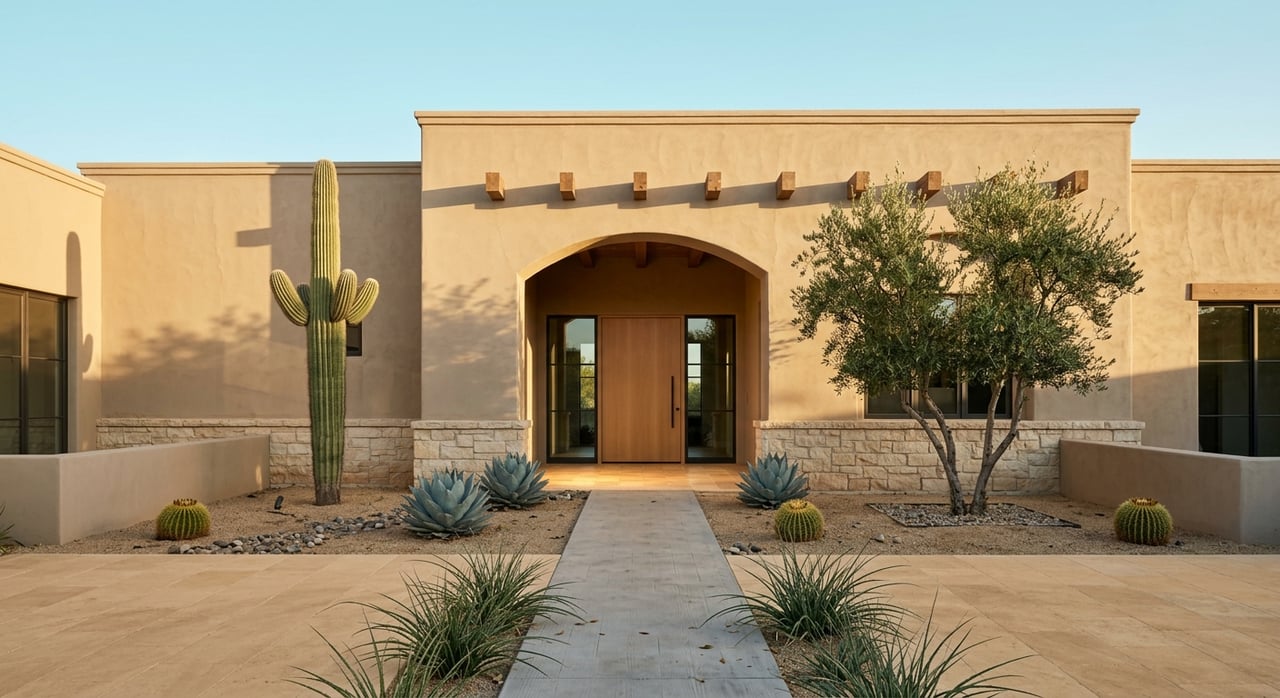
Southwestern styles remain a natural fit for the desert setting. In Paradise Valley, that often means Territorial, Pueblo, or Santa Fe-inspired homes with stucco walls, parapets, rounded forms, and exposed beams or vigas.
These homes tend to feel grounded in the landscape because their forms are simple and their materials recede rather than compete with the setting. When done well, they create a quiet presence that works especially well on larger parcels where the land itself is part of the experience.
Santa Barbara and Spanish Revival homes
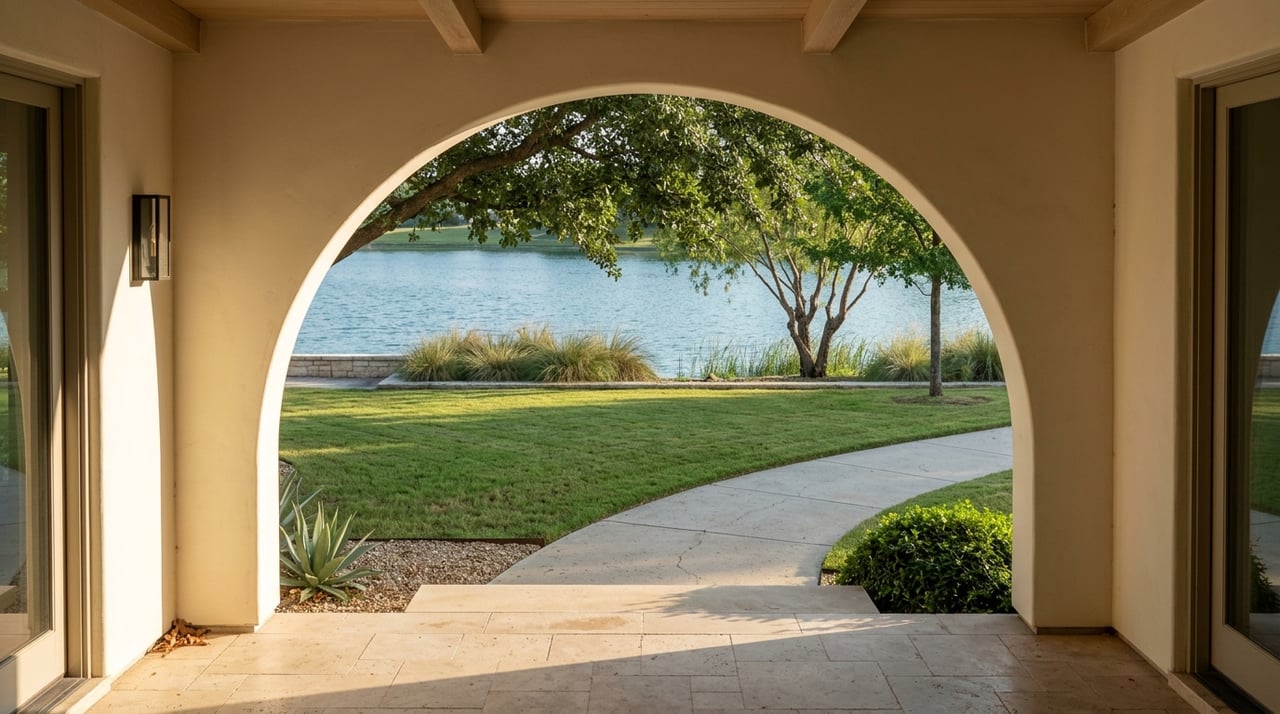
Another recurring language in Paradise Valley is Santa Barbara or Spanish Colonial Revival. This style often features smooth stucco, terracotta tile roofs, arches, wrought iron details, exposed beams, and a layout centered around courtyards, loggias, or patios.
This approach works well in Paradise Valley because it balances elegance with privacy. Outdoor rooms can soften the scale of a large home while adding shade, creating a more intimate experience on an estate-sized lot.
Contemporary and Desert Modern estates
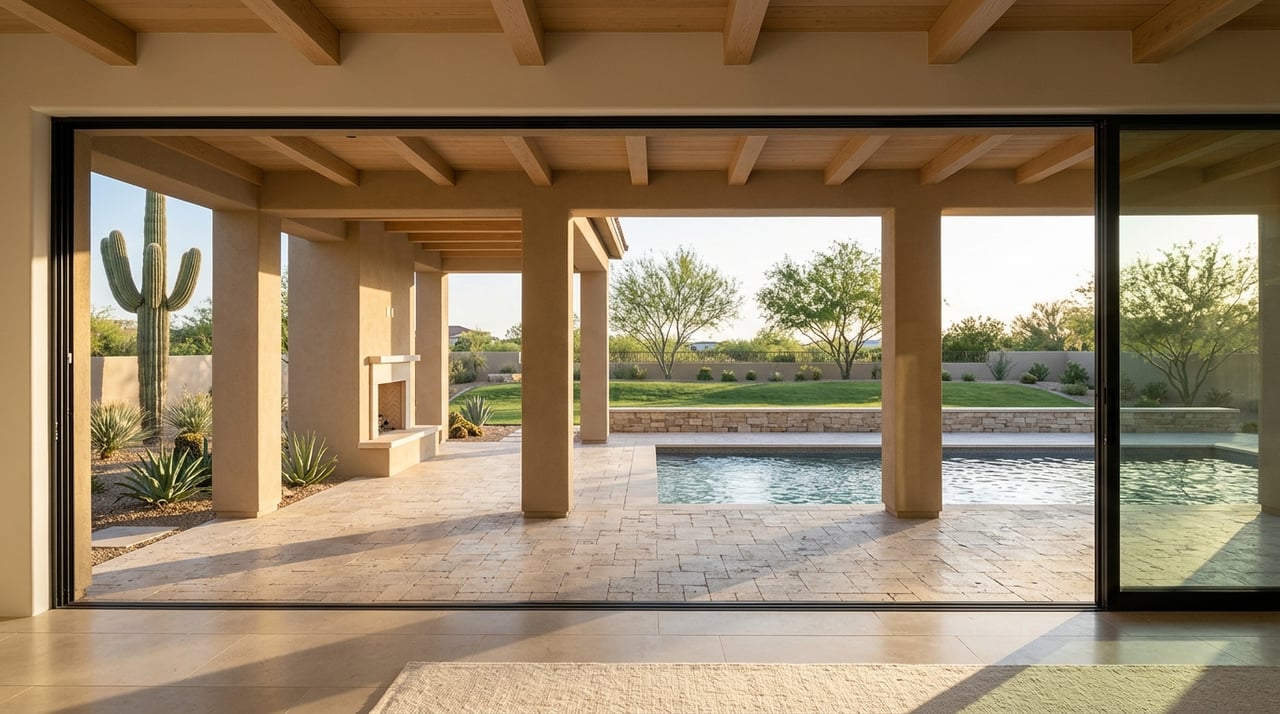
Contemporary design is one of the strongest currents in newer Paradise Valley homes. You will often see clean lines, horizontal massing, large expanses of glass, deep overhangs, and plans designed to maximize indoor-outdoor living.
On hillside sites in particular, this style can be very effective. Recent local projects show how modern homes are often shaped around view orientation, sun protection, and terrain, rather than simply building the largest possible structure.
Ranch, Mid-Century, and transitional remodels
Older areas of Paradise Valley still include legacy homes tied to ranch and mid-century design. The Town’s history notes that earlier homes were often modest in size and style, but they sat on large parcels, commonly one to five acres.
That legacy still matters today. Many buyers are drawn to low, linear ranch forms, original mid-century bones, or transitional remodels that preserve the core proportions of an older home while updating the livability and finish level.
What defines a timeless Paradise Valley estate
In Paradise Valley, timeless homes usually do more than look beautiful in photos. They tend to respect the site, maintain a coherent architectural language, and preserve a sense of privacy while taking advantage of view corridors.
The Town’s General Plan treats scenic views, mountain ridgelines, and dark skies as important community assets. That helps explain why homes that feel integrated with the land often leave a stronger impression than homes that rely mainly on ornament or contrast.
A home does not have to be historic to feel lasting. But it usually helps when the proportions, materials, and layout all speak the same language, whether that language is Santa Barbara, Desert Modern, or a carefully restored ranch aesthetic.
How massing shapes first impressions
One of the most important ideas in Paradise Valley design is massing. Massing refers to the overall volume of a home and how that volume is broken into parts.
This matters because a very large house can still feel refined if its scale is managed well. The Town’s planning guidance supports careful use of setbacks, facade articulation, fenestration, varied parapets and roof planes, and details that reduce visual impact.
In practical terms, that often means the best estates do not present as one oversized block. Instead, they step with the land, separate wings thoughtfully, and use rooflines and outdoor spaces to break up bulk.
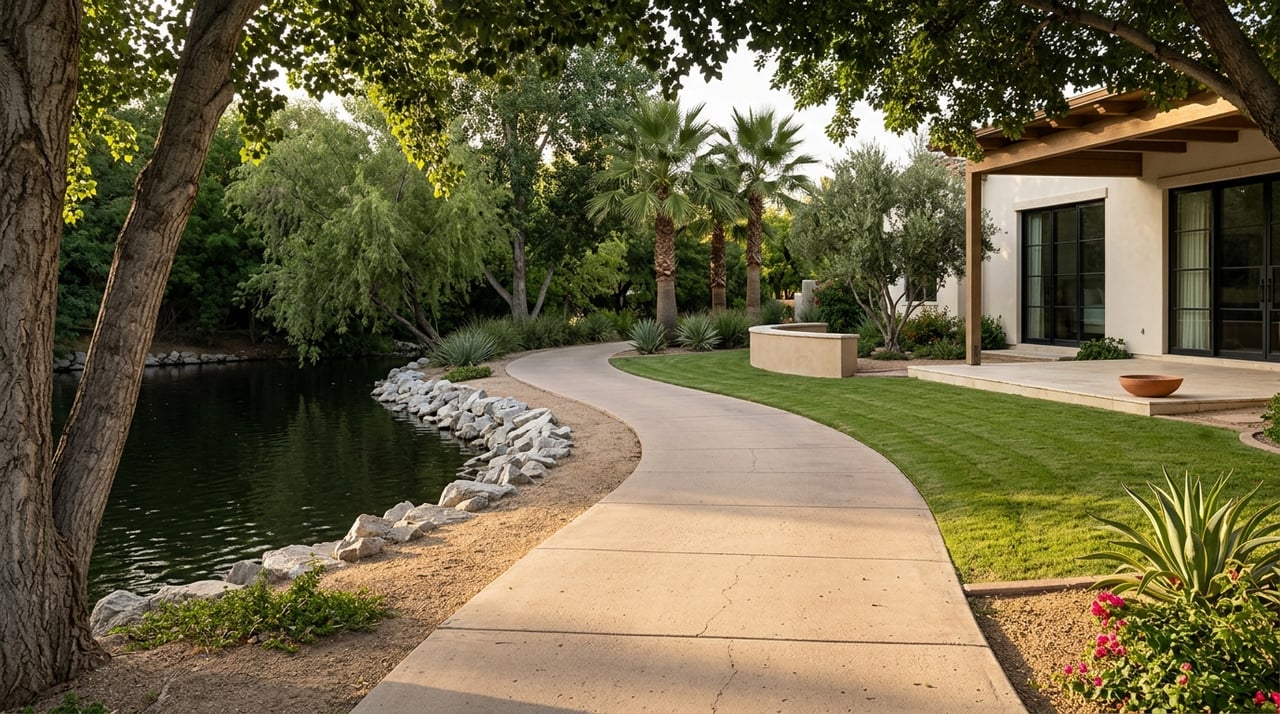
This is especially important on hillside lots. A home that follows the terrain often feels more natural and less imposing than one that appears forced onto the site.
Materials that fit the setting
In Paradise Valley, materials carry real weight. The Town’s hillside materials emphasize harmony with the native desert, which is one reason natural stone, stucco, wood, and restrained exterior palettes tend to resonate so strongly here.
These materials help a home settle into the landscape visually. They also support the broader goal of minimizing glare, reducing contrast, and maintaining a calm relationship between architecture and surroundings.
That does not mean every home has to look rustic. A modern estate can still feel sharp and sophisticated, but the most successful examples usually avoid flashy finishes in favor of texture, warmth, and a lower-contrast palette.
Outdoor rooms are part of the architecture
In many Paradise Valley estates, the outdoor living areas are not separate from the design. They are central to it.
Courtyards, patios, and loggias often add privacy, improve shade, and create a stronger connection between interior spaces and the desert climate. This is especially common in Santa Barbara, Spanish, and ranch-inspired homes, though modern estates use the same concept in a different language.
A courtyard-centered plan, for example, can make a large home feel more sheltered and personal. A deep overhang or covered patio can also improve comfort while preserving the strong indoor-outdoor lifestyle many buyers want in Paradise Valley.
Design details buyers should notice
When you tour homes in Paradise Valley, a few design terms can help you understand what you are seeing and why it matters.
Massing
Massing is the shape and volume of the house as a whole. Good massing can make a large estate feel balanced, site-aware, and visually calm.
Fenestration
Fenestration refers to the pattern of windows and doors. In Paradise Valley, larger glazing is often used to frame views and bring in light, but the best homes balance glass with shade, privacy, and scale.
Parapets, vigas, and stucco
These details often signal Territorial, Pueblo, Santa Fe, or Mission-influenced design. They help create the textured, grounded look that works so well in the desert.
Clerestory windows, overhangs, and planar roofs
These are common in modern hillside homes. They can improve natural light, provide shade, and reinforce the horizontal lines that help contemporary homes feel connected to the land.
Why architectural integrity supports value
Paradise Valley often rewards design integrity more than surface-level trendiness. Homes tend to feel stronger over time when their style is coherent and their materials, proportions, and site planning all support the same vision.
The Town’s Historic Property Recognition Program reflects this broader idea by recognizing properties that are at least 50 years old or that embody distinctive characteristics of a type, period, or method of construction. That perspective reinforces a simple truth: when the architecture is legible and well resolved, a home tends to carry more lasting character.
For buyers, that can mean a clearer sense of what makes one property special. For sellers, it can mean that the home’s design story becomes a real part of how it is positioned in the market.
What this means if you are buying or selling
If you are buying in Paradise Valley, it helps to look past décor and ask deeper questions. Does the home fit the site? Does the architecture feel consistent from the exterior to the floor plan to the materials? Does it preserve privacy while taking advantage of views?
If you are selling, those same questions shape presentation and pricing strategy. In a design-driven market like Paradise Valley, architectural quality, lot orientation, and craftsmanship can influence how buyers perceive long-term value.
That is one reason local design literacy matters. When a property’s style, massing, and setting are understood clearly, it becomes easier to position the home with precision and attract the right audience.
Whether you are evaluating a legacy ranch, a hillside modern, or a Santa Barbara-inspired estate, architecture is never just background in Paradise Valley. It is often the framework for how a property lives, how it feels, and how it stands apart. If you are considering a purchase, sale, or land opportunity in Paradise Valley, The Estates Office brings the design fluency, market perspective, and discreet guidance that these properties deserve.
FAQs
What architectural styles are most common in Paradise Valley estates?
- The styles most often associated with Paradise Valley estates include Territorial or Santa Fe, Santa Barbara or Spanish Revival, Contemporary or Desert Modern, and older ranch or mid-century homes, along with transitional remodels.
Why does architecture matter so much in Paradise Valley real estate?
- Architecture matters in Paradise Valley because the Town emphasizes semi-rural character, large lots, scenic views, hillside sensitivity, and design that responds to the desert setting.
What makes a Paradise Valley estate feel timeless?
- A timeless Paradise Valley estate usually respects the site, uses a consistent architectural language, preserves privacy, and handles views, massing, and materials with restraint.
What is massing in Paradise Valley home design?
- Massing is the overall volume of a home and how it is broken into parts, and in Paradise Valley it is important because it affects visual impact, hillside fit, and how refined a large house feels.
What materials are common in Paradise Valley hillside homes?
- Common materials in Paradise Valley hillside homes include stucco, natural stone, wood, and low-glare finishes that blend more naturally with the desert landscape.
How should buyers evaluate architectural quality in Paradise Valley?
- Buyers should look at how the home fits the lot, how well the design captures views and privacy, whether the materials suit the setting, and whether the architecture feels coherent throughout the property.