Buying in Paradise Valley Farms can look simple at first glance. You see large homes, generous lots, and a Scottsdale address that carries lasting appeal. But in a neighborhood like this, the smartest buyers know the real decision is not just about the house itself. It is also about the land, the buildable area, the existing improvements, and what the property will realistically allow you to do next. If you are considering a purchase here, a few early checks can protect your time, budget, and long-term plans. Let’s dive in.
Why Paradise Valley Farms Stands Out
Paradise Valley Farms is not a typical tract neighborhood. Scottsdale’s subdivision inventory identifies the community with an average parcel size of about 49,000 square feet, or roughly 1.12 acres. The city zoning map also classifies R1-43 as single-family residential with a 43,000-square-foot minimum lot area, which is about 0.99 acres.
That matters because you are buying into a true large-lot custom setting. In practical terms, the site itself becomes a major part of the value. If you are thinking about a guest house, detached garage, expanded outdoor living, or a future remodel, the lot may shape those options just as much as the floor plan does.
Focus on the Site, Not Just the House
With properties of this scale, square footage alone does not tell the full story. Easements, setbacks, and prior site work can all affect what is actually buildable on the lot. A home may sit on more than an acre, but the usable and compliant buildable envelope can be much narrower than buyers expect.
Scottsdale recommends starting any new construction or major remodel review with the title report, HOA documents, and a setback request. The city’s setback request tool is designed to identify subdivision details, zoning, FEMA flood-zone data, and the easements and conditions that define the buildable envelope. If you may want to change the property later, this step should happen early.
Why buildable area matters
On a large lot, it is easy to assume there is room for almost anything. In reality, accessory structures, wall placement, and site layout are still subject to rules. Scottsdale notes that some projects may require parcel or easement creation, modification, or deletion, and permits cannot be issued until those items are completed.
That can affect timing and cost in a meaningful way. If you plan to modernize the estate, add detached improvements, or rework the site, you want clear answers before your design ideas become contract assumptions.
A boundary survey is worth serious attention
Scottsdale strongly recommends a boundary survey before site modifications. That survey helps confirm structure locations and setback compliance. For a buyer, it can also help answer an important question: does the property line up with the way the home, walls, patios, and accessory improvements appear to sit on the lot?
In a neighborhood like Paradise Valley Farms, this is a practical part of due diligence, not an extra formality. Large sites often come with more moving parts, and clarity up front is usually less expensive than correction later.
Understand Accessory Buildings and Perimeter Rules
Many buyers drawn to Paradise Valley Farms value flexibility. You may be considering a casita, barn-style outbuilding, detached garage, expanded storage, or upgraded perimeter treatment. Scottsdale’s larger-lot zoning standards matter here.
In the size range that includes Paradise Valley Farms, accessory buildings have specific rear and side setback rules. The code also limits walls, fences, and hedges in the front yard, caps how much of a lot can be enclosed, and encourages walls that follow the land form. If exterior privacy, parking, or detached structures are part of your vision, it is important to confirm what the code and any private restrictions actually allow.
Landscape and Irrigation Need Real Review
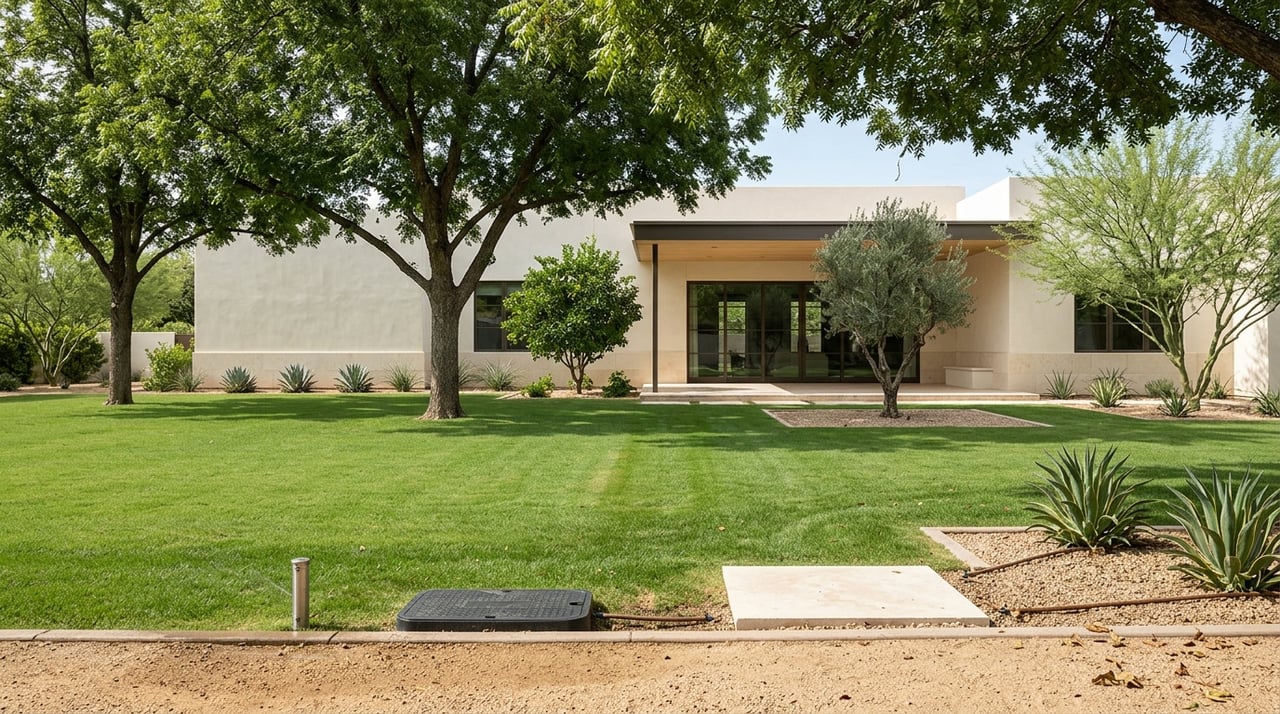
In estate neighborhoods, buyers often focus heavily on the home’s interior systems. That makes sense, but in Paradise Valley Farms the landscape and irrigation system deserve the same level of attention. Scottsdale Water states that irrigation systems typically last 10 to 25 years, and efficiency tends to decline as systems age.
That means an older irrigated property should be reviewed as carefully as the roof, HVAC, or pool equipment. If the lot includes extensive planting, turf, mature desert landscaping, or multiple irrigation zones, deferred maintenance can become a meaningful ownership cost.
What to ask about irrigation
Before you move forward, it is worth asking:
- How old is the irrigation system?
- When were valves, controllers, backflow devices, or major zones last replaced?
- Are there known leaks, weak coverage areas, or outdated controls?
- Has the landscape been maintained with water efficiency in mind?
Scottsdale Water recommends walking a property every two weeks to look for leaks and advises owners to set aside reserves for eventual irrigation replacement. That guidance gives buyers a useful lens. A mature estate landscape can be an asset, but it should be understood as an operating system, not just a visual feature.
Desert design still shapes expectations
Scottsdale’s Sensitive Design Program says development should respond to the surrounding context, topography, and desert environment. It also calls for mature landscape materials indigenous to the arid region and site design that uses desert-adapted landscaping and efficient water use.
For you as a buyer, that creates a practical benchmark. If you are comparing properties or planning future exterior work, it helps to think beyond appearance alone and consider whether the site design fits Scottsdale’s broader approach to the desert setting.
Remodeling Costs Can Change Quickly
Many buyers in Paradise Valley Farms are not just purchasing for today. They are also buying for what the property could become. If that is your approach, Scottsdale’s single-family construction process is one of the most important planning tools to understand.
The city recommends a pre-application meeting before formal submittal, followed by plan review, permit issuance after compliance is confirmed, and inspections during construction. Scottsdale also publishes guides and templates for common residential projects, including additions, detached garages, patio covers, and retaining walls.
Two city triggers to know
Two cost triggers stand out for buyers considering future work.
First, Scottsdale says that if a residential improvement exceeds 25 percent of the existing structure valuation, fire sprinklers are required throughout the entire residence. That is not a small line item, and it can materially change a remodel budget.
Second, additions or renovations equal to or greater than 50 percent of the existing structure may require water and or sewer improvements that must be completed and accepted before plan approval. If you are buying with plans for a major overhaul, these thresholds should be part of your financial planning from the beginning.
City Rules and Private Rules Are Different
A property can appear straightforward under city zoning and still come with private restrictions that matter. Scottsdale notes that CC&Rs are civil contracts between the owner and the association, are not enforced by the city, and are not maintained or monitored by the city.
That means you should treat title review and CC&R review as separate steps. Even if zoning appears favorable, private design rules or other recorded restrictions may be stricter than city code. In a custom neighborhood, that distinction is important.
Smart Buyer Questions Before You Offer
If you want a cleaner purchase process, ask the hard questions before you write or remove contingencies. Scottsdale’s planning and water guidance points to a practical framework for buyers in Paradise Valley Farms.
Here are some of the most important questions to answer:
- What is the exact buildable envelope after easements, setbacks, and title exceptions are applied?
- Were prior additions, patios, casitas, barns, walls, or other improvements properly permitted?
- Are the existing improvements still conforming?
- How old is the irrigation system, and what has been replaced recently?
- Will your intended remodel trigger sprinklers or water and sewer upgrades?
- Are there CC&Rs or private design restrictions that go beyond city code?
These are not niche questions. In a neighborhood where lot value, site utility, and design potential matter, they are part of understanding what you are truly buying.
How to Buy More Confidently
The safest way to buy in Paradise Valley Farms is to evaluate the property as both a home and a site. That means verifying lot geometry, reviewing permit history, confirming easements and setbacks, inspecting irrigation and landscape condition, and getting experienced design or builder input before you rely on future plans.
For design-conscious buyers, this kind of diligence is often where confidence comes from. It helps you understand whether a property fits your lifestyle now, whether it supports your long-term goals, and whether the budget you have in mind is realistic.
Paradise Valley Farms can offer scale, privacy, and flexibility that are increasingly hard to find. But the best purchases here usually come from careful review, not quick assumptions.
If you are considering a purchase in Paradise Valley Farms and want guidance that goes beyond the listing sheet, The Estates Office brings Scottsdale market insight, land and development perspective, and a discreet advisory approach tailored to high-value properties.
FAQs
What should buyers verify before buying in Paradise Valley Farms?
- Buyers should confirm the buildable envelope, review title and any CC&Rs, check permit history for existing improvements, and inspect irrigation and landscape systems closely.
How large are lots in Paradise Valley Farms?
- Scottsdale’s subdivision inventory lists the neighborhood with an average parcel size of about 49,000 square feet, or roughly 1.12 acres, and the R1-43 zoning district requires a 43,000-square-foot minimum lot area.
Why do easements and setbacks matter in Paradise Valley Farms?
- Easements and setbacks help determine the true buildable area of the lot, which can affect additions, accessory structures, wall placement, and future design plans.
What remodeling issues should buyers consider in Paradise Valley Farms?
- Buyers should review Scottsdale’s construction process and pay close attention to city thresholds that can trigger whole-house fire sprinklers or required water and sewer improvements.
What should buyers know about irrigation in Paradise Valley Farms?
- Scottsdale Water says irrigation systems typically last 10 to 25 years, so buyers should ask about system age, recent repairs or replacements, and overall efficiency before closing.
Do city zoning rules override CC&Rs in Paradise Valley Farms?
- No. Scottsdale notes that CC&Rs are private civil contracts and are separate from city enforcement, so buyers should review both city rules and private restrictions.